






Keep the clinical assessment separate from product demand
The person enquiring may expect a particular treatment after reading about it elsewhere. Your public material should explain that a clinician assesses suitability and discusses appropriate options. It must not guarantee eligibility, prescribing or a particular amount of weight loss. Service descriptions should reflect the actual care team, including any dietetic or psychological support, rather than implying multidisciplinary care that is not delivered.
Telehealth changes how someone attends; it does not remove the need for a proper assessment, follow-up or escalation arrangements. Show who provides the consultation, the locations the service can support and how ongoing care is organised. Avoid suggesting that a quick online form is sufficient to secure treatment or that a medical appointment automatically receives a Medicare or medicine subsidy.
How we would structure the search account
The first step is a review of the public service and full booking path, including linked articles and page titles. If the site promotes restricted medicines, changing the ad text does not make a campaign ready. Resolve that question before forecasting clicks or setting a launch date.
Where the service is eligible, separate local assessment intent from telehealth and from surgical weight management. Use consultation-led search themes tied to the clinic's real scope. Screen search terms for medicine purchasing, online supply and outcomes the clinic cannot promise. Keep brand and existing-patient demand separate from new consultation enquiries. Expansion follows evidence of appropriate assessment enquiries, not a desire to capture every popular weight-related query.
Search themes to assess against your service scope
- medical weight management clinic [area]
- weight management consultation
- doctor-led weight management assessment
- weight management telehealth consultation
- weight management follow-up care
We tailor these ideas to your services, audience and advertising requirements.
A starter negative-keyword review
Review medicine names and classes, buy online, wholesale, supplier, injections, bodybuilding and product-price searches for exclusion. Exclude bariatric surgery and commercial diet programs if the clinic does not provide them. Do not use indirect product wording to recover restricted traffic.
What the landing page needs to answer
Describe the care team, assessment, follow-up, appointment format and clinical limits. No prescribing guarantee, product menu or transformation promise. Clinical eligibility screening belongs in a secure clinical process after the initial contact request.
Judge enquiries by appointment suitability, not prescription demand
Keep public enquiry forms short and move medical history into a secure clinical process. An advertising platform does not need weight, diagnoses, medicines, eligibility answers or consultation notes. Even the name of a conversion event or a page URL can reveal the service someone is seeking. Review those signals before enabling any advertising tracking.
The clinic should distinguish contact requests, completed assessments and ongoing care internally. Do not reward a campaign simply because it attracts people asking for a named product. A useful enquiry is one the clinic can assess within its scope, with realistic expectations about what a consultation does and does not promise.
What the available search-cost data can tell you
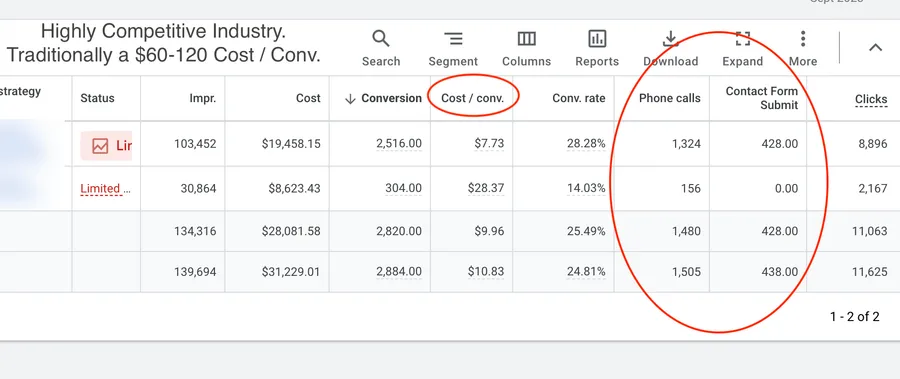
Our Q3 2026 Australian weight management keyword set totals around 20,190 estimated monthly searches nationally, combining Google Keyword Planner volumes with third-party estimates. Across priced terms, the volume-weighted average CPC is $10.02 and high-range top-of-page bids reach $28.93. Modelled from the weighted top-of-page bid with a 10% to 15% click-to-lead assumption, indicative cost per lead sits around $80 to $125. The set includes bariatric surgery and other services, so local forecasts use only the terms that match your clinic.
We set a test around the services and locations you can take on, forecast clicks conservatively and review real enquiries before expanding. Ad spend sits separately from management.
Advertising and communication boundaries
TGA restrictions on public prescription medicine advertising apply to names, classes and indirect references. Assessment wording does not make a product-led offer lawful. Review the landing page, booking menu, images and linked content as one communication. Ahpra advertising rules and Google healthcare policy apply separately; an approved ad is not a compliance certificate.
Use: "Medical weight management consultations, with assessment and follow-up." Avoid: "Guaranteed access to weight loss injections." Even the service-led wording must be checked in the context of the full website and actual service.
Understand which enquiries become appointments
Agree which actions count before changing bids. A call-button click, an answered call, a submitted form and a confirmed appointment are different events. Check booking completion data against the actual system and deduplicate enquiries across phone and form. We report confirmed bookings separately from calls and form enquiries, and explain any gaps in tracking.
We track calls without recording every conversation, and any recording runs through a consent process. Clinical notes, diagnoses and referral documents stay out of analytics and advertising audiences.
How we would judge the work
Use clinic records to distinguish appropriate enquiries, assessment bookings and attendance. Review any proposed conversion signal for health information before sharing it. Keep the marketing objective separate from the clinician's prescribing decision.
Five mistakes to check in an audit
- Medicine demand drives the keyword plan. Do not turn medicine searches into a public product offer. Start with the lawful clinical service and screen queries accordingly.
- A neutral ad leads to a product menu. Review the whole destination and linked booking path. Changing the headline alone does not fix prohibited promotion.
- Weight loss results used as promises. Do not set expected kilograms or timelines through creative. Suitability and outcomes belong in clinical care.
- Eligibility questions sent to ad platforms. Keep medical screening, weight and treatment information in the secure clinical system, outside marketing pixels and event payloads.
- Bariatric search data treated as clinic demand. The published benchmark includes different service models. Filter local forecast keywords before using it to plan an assessment campaign.
Related service information and reading
See our marketing approach for medical weight management clinics and healthcare Google Ads service information. Related services: Meta Ads for medical weight management clinics, Website design for medical weight management clinics, SEO for medical weight management clinics.
For search-market context, see the weight management Google Ads benchmarks. These are search advertising references, not agency prices or promised results.
Further reading: Healthcare Tracking Pixels in Australia: What Our 100-Site Study Found; TGA Compliance Priorities.
Check the applicable rules: Ahpra advertising guidance; TGA advertising requirements; Google Ads healthcare policy guidance.
Get a free Google Ads audit to discuss the services, capacity and enquiry pathways that matter for your organisation.
Updated 4 October 2026.