







Multi-Audience Design
Websites structured to serve families, participants, and support coordinators. Each audience finds what they need without confusion.
An NDIS website is not a healthcare site with a logo swap. It has its own audiences, its own accessibility rules, and its own compliance constraints. We build NDIS websites that read clearly for participants, brief well for support coordinators, and convert enquiries without falling foul of the Quality and Safeguards Commission.
Trusted by 100+ Australian and Global businesses in healthcare
Why NDIS Providers Choose Us
Families need reassurance. Support coordinators need evidence. Participants need clarity. Your website must serve each audience without confusion or compromise.
Websites structured to serve families, participants, and support coordinators. Each audience finds what they need without confusion.
Clear information about qualifications, registration status, approach, and team. Build the trust families need before they contact you.
Clear explanations of your services in language families understand. Help visitors quickly determine if you offer what they need.
Multiple easy ways to enquire. Some families call. Some submit forms. Some want to book online. Your website accommodates all preferences.
Families research on phones late at night. Support coordinators check websites between appointments. Mobile performance matters.
For providers serving multiple areas, location-specific pages show families you operate where they live.
Our Approach
A collaborative process that captures what makes your organisation special and presents it to the right audiences.
We learn your services, audiences, and goals. We identify what your website needs to communicate to families, coordinators, and participants.
Structure your website so each audience finds what they need. Services, locations, team, and contact information organised for clarity.
Professional visual design that builds credibility. Clean, accessible, and appropriate for NDIS provider audiences.
Clear copy that explains your services in language families understand. We can write content or help you refine what you have.
Fast, accessible, mobile-optimised development. Built to perform well in search engines and convert visitors.
Full deployment with training on how to manage your site. Ongoing support available for updates and improvements.
NDIS Website Strategy
What we have learned from building websites for NDIS providers across every service category.
NDIS websites get treated like a healthcare website with a logo swap. That's the first thing most providers get wrong, and it's usually the agency's fault. A clinic website is built around one decision-maker (the patient or their parent), one regulator (AHPRA or the TGA), and one transaction (book an appointment, pay a gap). An NDIS website has to carry three audiences, a different regulator, plan-driven funding mechanics, and an accessibility bar that most healthcare sites don't even meet on a good day. Build it like a healthcare site and you'll fail at least one of those obligations, usually all of them.
The accessibility piece is the most obvious gap. The NDIS Practice Standards and the Quality and Safeguards Commission expect participants to be able to use your website, which in practice means WCAG 2.1 AA as a floor: screen-reader compatibility with proper landmarks and alt text, keyboard navigation without traps, colour contrast ratios that hold up at 4.5:1, form labels that announce correctly, focus states that are visible, and plain-English copy that a participant with an intellectual disability can actually read. Most healthcare sites built in the last five years still ship with carousel sliders that hijack focus, hover-only menus, low-contrast brand colours, and copy pitched at a year-12 reading level. None of that is acceptable on an NDIS website, and increasingly coordinators will quietly drop providers off shortlists when the site fails on accessibility.
An NDIS website is read by participants, by the family members and informal supports around them, and by the professional decision-makers who actually control most of the referral flow: support coordinators, plan managers, LACs, early childhood partners and discharge planners. Each one is looking for different information, and the website has to surface what they need without making the other two audiences wade through it.
Participants and families want plain-English service descriptions, a clear sense of what a first session or first visit looks like, photos of the actual team, and a contact path that isn't intimidating. Support coordinators want to know your registration status, the participant groups you can serve, your service categories under the NDIS Pricing Arrangements, your geographic coverage, current vacancy or waitlist status, and how easy you are to refer to. Plan managers want clean invoicing details, ABN, NDIS provider number, and confirmation you can produce compliant service agreements. The site needs a referrer-facing area for the professional audience so they can find that information in two clicks, not five.
For most NDIS providers, the single biggest growth lever a website pulls is making referral easier for support coordinators. Most NDIS provider sites get this wrong by burying the contact path under three layers of marketing copy. A coordinator doesn't have time to read your About page. They need a one-page summary of what you do, who you can serve, where you can serve them, what your capacity looks like, and a referral form or email address that lands in front of an intake person within the same business day. We build that as a dedicated referrer hub on every NDIS website we deliver. Providers that have it consistently see coordinator referrals lift inside a quarter, because they've removed the friction that was costing them shortlist spots.
The NDIS Quality and Safeguards Commission's public guidance on advertising sits alongside the NDIS Code of Conduct and the NDIS Practice Standards, and all three shape what an NDIS website can and can't say. Outcome claims need qualifying. Participant stories only run with documented informed consent and only where the participant retains genuine choice and control over what's published. Registration status has to be communicated accurately, and the participant groups you can serve under that registration have to match what the website implies. Anything that creates an inducement or that misrepresents what's covered under a plan is a fast track to a complaint. Every NDIS website we build is reviewed against this guidance before launch, and we document the consent trail for any participant or family content so there's a record if the Commission ever asks.
NDIS providers are required to make complaints and feedback easy to lodge. Most provider websites either bury this in a footer link or skip it entirely, which is a Practice Standards problem waiting to happen. We build a clear feedback and complaints page into every NDIS website with both internal pathways (your own intake) and the external pathway to the Quality and Safeguards Commission. It's a small piece of the site that has an outsized influence on whether you survive an audit cleanly.
If you deliver in a participant's home or in the community (most SIL, daily living, community access, support coordination and therapy providers do at least some of this) the website needs to show coverage clearly. A generic 'we service Sydney' line costs you enquiries from coordinators who don't know which postcodes are actually serviceable. We build interactive service area maps or postcode-level coverage lists into NDIS websites so coordinators can self-qualify in seconds. The same pages double as local SEO anchors that pick up suburb-level NDIS search demand.
NDIS providers usually deliver across several service categories, and each category needs its own page. Lumping SIL, SDA, plan management and support coordination under a single 'Our Services' page is a category error that costs you on every front: search visibility, coordinator clarity, and family understanding. We architect NDIS websites around dedicated pages for every service category you deliver, with clear scope, eligibility, funding mechanics, and intake process on each. Specifically: Supported Independent Living (SIL), Specialist Disability Accommodation (SDA), Plan Management, Support Coordination, Community Access, Respite Care (Short-Term Accommodation), Daily Living Support, and therapy services. Each category has different referrer dynamics, different funding mechanics, and different things participants are searching for. The website has to reflect that.
An NDIS website should tell a participant or family which funding stream covers your services without making them call to find out. Therapy, support coordination and capacity building activities sit under Capacity Building. Daily personal supports, SIL and community access typically sit under Core. SDA and assistive technology sit under Capital. Plan-managed and self-managed participants have different invoicing flows than agency-managed participants. A good NDIS website surfaces this information on the relevant service page rather than burying it in an FAQ, because it qualifies enquiries before they hit your intake team and stops you wasting time on participants whose plans can't fund what you do.
NDIS provider websites face a unique challenge: multiple audiences with different needs visiting the same pages. A parent researching SIL options needs different information than a support coordinator assessing whether to recommend your organisation. A participant wanting to understand your services has different questions than a family member managing their loved one's care.
Most NDIS websites fail this challenge. They speak to one audience while confusing others. They bury critical information beneath stock photos and corporate language. They make it difficult for visitors to determine whether you actually provide what they need.
We approach NDIS website design differently. Every page considers multiple visitor types. Navigation helps each audience find what they need without wading through irrelevant content. Service descriptions use language that families understand while including details coordinators require.
Families choosing NDIS providers are making high-stakes decisions. They are entrusting their loved one's care to your organisation. Your website must build trust quickly and credibly.
Registration status matters. Families want to know you are a registered NDIS provider. Qualifications matter. They want to know your team is properly trained and certified. Experience matters. They want to know you have done this before successfully.
But trust signals extend beyond credentials. Photos of your actual team build connection. Real images from your facilities and activities establish expectations. Testimonials from families in similar situations provide social proof. Location specificity confirms you operate where they live.
We help NDIS providers identify and present their trust signals effectively. Not buried in an About page, but woven throughout the site where visitors need reassurance.
NDIS services can be complex. Plan management, support coordination, SIL, SDA, therapy services, core supports. Families new to the NDIS may not understand these categories. Even experienced families may be unclear on what your specific services include.
Your website must explain your services in accessible language. What do you actually do? Who do you serve? What areas do you cover? What can families expect when they engage your organisation?
We write service descriptions that answer real family questions. Jargon gets translated. Processes get explained. Expectations get set. This clarity helps families self-qualify and ensures the enquiries you receive are from families who genuinely need what you offer.
Families research NDIS providers on their phones. A parent scrolling at 11pm while their child sleeps. A carer checking options while waiting at a medical appointment. A support coordinator looking up providers between home visits.
Your website must perform flawlessly on mobile devices. Fast loading. Easy navigation. Clickable phone numbers. Forms that work on small screens. If families struggle to use your site on their phone, they move to the next provider on their list.
Every website we build is mobile-first. We design for phone screens, then adapt upward for larger devices. This ensures mobile performance is never an afterthought.
NDIS participants and their families may have accessibility needs. Vision impairments requiring screen readers. Motor difficulties requiring keyboard navigation. Cognitive considerations requiring clear language and simple layouts.
All our NDIS websites meet WCAG accessibility standards. Proper heading structures. Sufficient colour contrast. Alt text for images. Keyboard navigable interfaces. This is not optional for NDIS providers. Your website should be accessible to the same people your services support.
NDIS services are delivered locally. A family in Liverpool does not care about your services in the Northern Beaches. Your website must show families you operate where they live.
For providers serving multiple regions, we create location-specific pages. Each area gets its own page optimised for local search terms. This helps families find you when searching for NDIS providers in their suburb, and confirms you actually deliver services where they need them.
Website traffic means nothing without conversions. Your site needs clear, easy paths to enquiry. Some families prefer calling. Some prefer forms. Some want to book a meeting directly.
We design conversion paths for different preferences. Prominent phone numbers that are clickable on mobile. Simple contact forms that do not ask for unnecessary information. Online booking integration where appropriate. Every page guides visitors toward taking the next step.
A well-designed NDIS website is only valuable if families, participants and support coordinators can actually find it. That is why every NDIS website we build includes an SEO-ready architecture from day one. We structure your site around the service categories that people search for, with dedicated pages for SIL, SDA, plan management, support coordination, therapy services, community access and core supports. Each page is optimised for the NDIS-specific terminology that participants and coordinators type into Google, paired with the suburbs and regions you serve.
Location pages, proper heading structures, schema markup and fast mobile performance are all built into the foundation rather than bolted on after launch. This gives your website the best possible starting position when you invest in ongoing NDIS SEO. Providers who combine a purpose-built website with a dedicated SEO program consistently outperform those running generic sites with no organic search strategy. The website is the foundation. SEO is what makes it visible.
Medical Marketing Results
Case Study
“We went from launch to $1M ARR in seven weeks.”
Mitchell — Founder, Rumen
New telehealth clinic needed rapid patient acquisition and efficient operations to scale in the medical weight loss market.
Full-funnel digital strategy with automated bookings, patient management, and retention-focused campaigns.
350 to 6,500 patients in 15 months. $1M ARR in 7 weeks. 90% admin workload reduction through automation.
Client Results
Medical practices across Australia share how they transformed patient acquisition with AHPRA-compliant marketing that delivers measurable outcomes.
"Casey and his team have been a true partner, helping to grow the business through successful campaigns. Casey shows high levels of expertise and we've been lucky to have him on board as the 'Marketing Engine'."
"We went from 350 to 6,500 patients in under 15 months. Admin load cut by over 90% and patient retention jumped by more than 450%."
"They have single-handedly grown my business. We're now turning away $60,000 every week in organic leads. Because, we just don't have the capacity."
"Since going with Casey and his team, we have had nothing but wins. They've got awesome results with low lead costs and have taken the time to really understand our business."
"If you're looking for a highly experienced, knowledgeable and ideas-driven marketing agency, look no further. He's helped transform our business from a fairly humble start-up to a fast growing service provider."
"Super impressed with his promptness, communication, professionalism, and knowledge of the full suite of digital marketing. You and your team are second to none!"
"As an experienced health professional I am a hard sceptic. Casey and his team over delivered on my project with an A+ website design having actively listened to every point I was seeking."
"Working with Casey and his team was nothing short of exceptional. The final product exceeded all expectations, both visually and functionally. It was a seamless experience from start to finish."
"Casey and his team were an absolute lifesaver. They understood exactly what our vision and goals were and did not fall short of delivering an exceptional piece of work."
"The communication was quick, clear and easily understandable. They balance patience and efficiency really well, resulting in a superb end product. Highly recommended."
"Casey was so empathetic and patient in listening to my ideas. He goes above and beyond. If you want a marketing agency that REALLY wants to help you grow your business, pick Casey and his team."
"Excellent company to deal with and their web design is incredible. Would use them again and again."
"The communication was quick, clear and easily understandable. They balance patience and efficiency really well, resulting in a superb end product. Highly recommended."
The Full Digital Ecosystem
We engineer patient acquisition infrastructure. Every system connected. Every conversion tracked. Every dollar accounted for.
Every practice has different needs. We build on the platform that delivers the best outcomes for your goals, whether that is a familiar CMS, a high-performance framework, or a fully custom solution.
GA4, GTM, Google Ads, Meta Pixel, TikTok Pixel, and server-side Conversions API working in tandem. Event deduplication, enhanced conversions, and ad-blocker resilience available when your practice is ready to scale.
Seamless integration with the practice management systems you already use: Cliniko, HotDoc, Splose, Halaxy, HealthEngine, Medirecords, and more.
End-to-end attribution from first click to booked appointment. Know exactly which campaign, ad, and keyword delivered each patient.
Seamless booking flows connected to your practice management system. Patients see availability and book directly from your website without friction or phone calls.
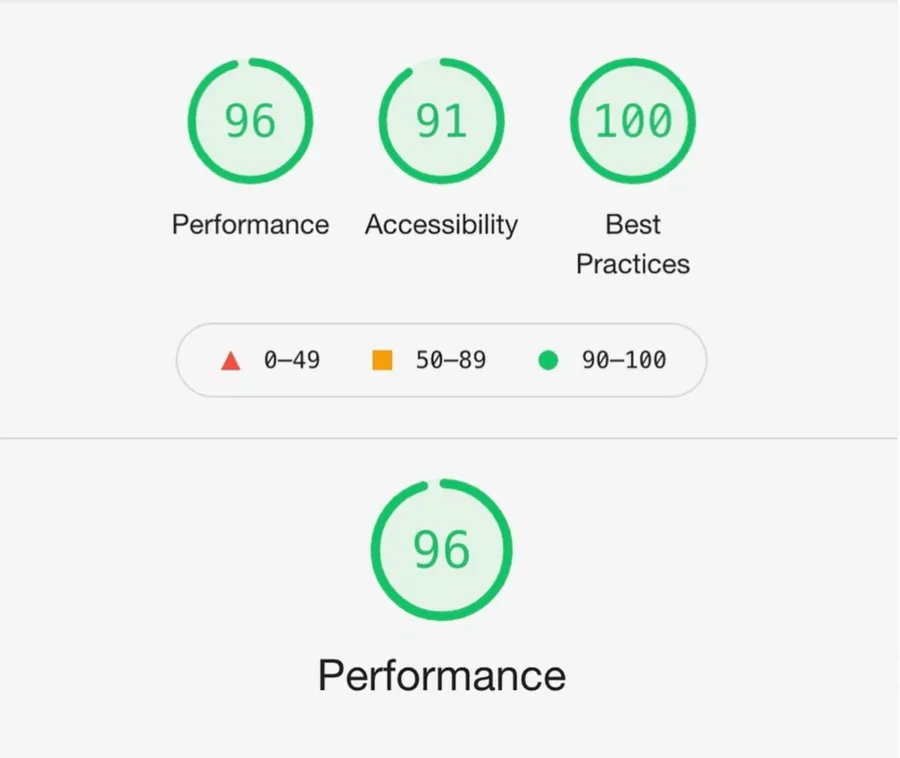
Google Lighthouse scores of 90+ across Core Web Vitals. Edge-cached, server-rendered, and built for sub-second page loads that keep patients engaged and search rankings high.
Compliance is baked into every page, not bolted on after the fact. AHPRA advertising guidelines, TGA requirements, and platform policies are considered from the first wireframe.
Our design team builds beautiful websites. Our marketing team makes sure they convert. Every page layout, CTA placement, form structure, and content hierarchy is informed by what we have learned across 100+ healthcare projects. The result is a site that looks world-class and delivers real business outcomes.
JSON-LD structured data, dynamic XML sitemaps, canonical tag strategy, crawl budget optimisation, and programmatic internal linking across hundreds of pages. The search infrastructure layer that makes your website readable and rewardable by Google, Perplexity, ChatGPT, and whatever comes next.
Trigger automations when a form is submitted, a booking is made, or a lead hits a threshold. Connect your website to Zapier, Make, CRMs, and internal tools via real-time webhooks.
Dedicated servers leased from top-tier cloud providers. Reverse proxy for DDoS protection and edge caching, server-level firewall, web application firewall at the app layer, and form-level spam filtering. Transactional email servers, automated backups, and SSL. Multiple layers of security between the internet and your practice data.
Enterprise-grade analytics infrastructure from day one. GA4, Meta Events Manager, and platform-native reporting configured to surface leads, traffic sources, cost per acquisition, and conversion rates across every channel.
We built a full in-house design and development team. Not to create brochure websites, but to engineer patient acquisition infrastructure. Pre-screening flows, practice management integrations, real-time availability, and server-rendered architecture with edge caching. If some of that sounds like it belongs in a technology company, good. That's the standard we hold ourselves to.
What You Receive
Everything required to establish your online presence and convert visitors into participants.
Bespoke design tailored to your NDIS services and brand. Not a generic template.
Dedicated pages for each service you offer, optimised for search and conversions.
Pages for each service area you cover, helping families find you where they live.
Present your team professionally. Families want to know who will be supporting their family member.
WCAG compliant design ensuring all visitors can access your information regardless of ability.
Perfect display across all devices. Families research on phones at all hours.
Easy enquiry paths with tracking so you know where leads come from.
Technical SEO built in so your website can rank for relevant searches.
Common Questions
Practical answers about building a website that serves families, coordinators, and participants effectively.
At a minimum, an NDIS website needs clear service category pages for everything you deliver, your registration status and the participant groups you can serve under it, your geographic coverage, accessibility that meets WCAG 2.1 AA, a complaints and feedback pathway, plain-English service descriptions a participant can actually read, and a referrer-facing area for support coordinators and plan managers. On top of that you need NDIS provider number and ABN visible for plan-managed invoicing, intake forms that capture plan management type so your team can qualify enquiries, and content that addresses the funding stream (Core, Capacity Building or Capital) each service sits under. Most generic healthcare websites miss at least half of that list.
The NDIS Practice Standards and the Quality and Safeguards Commission expect participants to be able to use your website, which in practice means WCAG 2.1 AA as the floor. That covers screen-reader compatibility with proper landmark and heading structure, full keyboard navigation without focus traps, colour contrast of at least 4.5:1 for body text, visible focus indicators, form labels that screen readers announce correctly, alt text on meaningful images, captions on video content, and copy written in plain English. Beyond the technical checklist, an accessible NDIS website also avoids carousels that auto-rotate, hover-only navigation, and PDFs as primary content. We build to WCAG 2.1 AA on every NDIS website we deliver, and we test with actual assistive technology before launch rather than relying on automated scanners that miss the things participants notice immediately.
A healthcare website is built around one decision-maker (the patient or their parent), one regulator (AHPRA or the TGA), and one transaction (book, attend, pay a gap). An NDIS website carries three audiences in parallel: participants, the families and informal supports around them, and the professional decision-makers like support coordinators, plan managers and LACs who control most of the referral flow. It's regulated by the NDIS Quality and Safeguards Commission rather than AHPRA, which changes what you can and can't claim about outcomes and how participant stories can be used. It has to communicate funding mechanics (Core, Capacity Building, Capital) and plan management type because that determines whether you can serve a given enquiry. And it has to meet a higher accessibility bar because participants directly use the site. A healthcare playbook applied to an NDIS website misses every one of these layers.
The structure is similar but the messaging shifts. Registered providers can serve agency-managed, plan-managed and self-managed participants, so the site can market to the full scheme. The trade-off is tighter compliance: clearer outcome qualification, careful handling of any content that touches restrictive practices, behaviour support or high-intensity supports, and Practice Standards alignment that holds up under audit. Unregistered providers can only serve plan-managed and self-managed participants, which is still most of the scheme, but the website needs to communicate that clearly so agency-managed enquiries don't waste your intake team's time. We build registration status, supported participant groups, and any audit context (current registration, mid-audit, pursuing registration) into the relevant pages so the audience self-qualifies before they enquire.
The NDIS Code of Conduct, the Practice Standards and the Quality and Safeguards Commission's public guidance on advertising are the relevant rulebooks. Outcome claims need qualifying. Inducements are out. Participant stories only run with documented informed consent and the participant has to retain genuine choice and control over what's published, which means a generic photo-release form often isn't enough. Registration status and participant groups have to be represented accurately. Pricing claims have to align with the NDIS Pricing Arrangements. Anything that misrepresents what a plan covers, or that suggests funding is automatic, is a complaint waiting to happen. We review every page of an NDIS website against this guidance before launch and document the consent trail for any participant or family content so there's a clean record if the Commission ever asks.
Three things drive enquiry volume on an NDIS website. The first is search visibility for the queries participants, families and coordinators actually use in your service area, which means service-category pages, location pages, plain-English condition or support type pages, and the local SEO fundamentals that go with them. The second is conversion design: intake forms that qualify on plan management type and funding stream, multiple contact paths (phone, form, sometimes online booking), and a referrer pathway that makes coordinators' lives easier. The third is content that genuinely helps the audience: pieces explaining how NDIS funding works for a specific support, what a first session looks like, how to switch providers without breaking the plan. The website handles the conversion. NDIS SEO and NDIS Google Ads are what bring the visitors who convert.
There's no strict requirement to publish the Code of Conduct on the website, but the website's content has to align with it, and most established providers either link to it or summarise the principles in their About or Compliance section. What you do need is a clear complaints and feedback pathway, both internal and external (to the Quality and Safeguards Commission), which is a Practice Standards requirement. You also need to make sure nothing on the site misrepresents your scope, your registration status, or the outcomes participants can expect. We treat the Code as the de facto editorial standard on every NDIS website we build, even where it doesn't get cited explicitly on the page.
Most NDIS providers list against the NDIS Pricing Arrangements rather than publishing fixed dollar figures, because the cap moves and because some supports are billed in different units (hour, day, event). We typically structure pricing copy around 'we bill within the NDIS Pricing Arrangements for [support type]' and link to the current Pricing Arrangements document, then explain any non-NDIS fees clearly (cancellation, travel, non-face-to-face) so participants and plan managers know what to expect. For plan management and support coordination, where pricing is more standardised, fixed figures are usually fine. Either way, pricing copy needs to be accurate, current, and consistent with what your intake team will quote on the phone. Inconsistency between website and intake is the fastest way to lose trust with a coordinator.
A standard NDIS website with up to eight service-category pages, a referrer hub, service area coverage, accessibility audit and proper intake forms takes around eight to twelve weeks from discovery to launch. Larger builds (multi-location SIL providers, providers running across SIL, SDA, support coordination and therapy in one site, or builds that include a participant or staff portal) usually run twelve to sixteen weeks. The biggest variable is content. If you have existing copy that needs rewriting for accessibility and audience, that adds time. If we're writing from scratch, it adds more. We scope and quote with the content timeline included so there are no surprises mid-build.
Yes, and most NDIS websites need to. We architect the site so every service category you deliver (SIL, SDA, plan management, support coordination, community access, respite, daily living, therapy) gets its own page with category-specific eligibility, funding mechanics and intake process, and every region you cover gets its own location page optimised for local NDIS search. For SIL providers running multiple houses, each house can have its own page with availability and design category. For national plan managers or support coordinators, location pages double as local SEO assets even where service delivery is remote. The architecture compounds: each service-location combination is a page that can rank, which is how providers with proper site structure pick up enquiries that competitors with single 'Services' and 'Locations' pages miss entirely.
Yes, and we recommend it. Most NDIS providers run an intake spreadsheet, a CRM (HubSpot, Zoho, sometimes a sector-specific tool like Brevity or Lumary), and a separate clinical or rostering system. Enquiry forms on the website should flow directly into the intake system rather than landing in a generic inbox that someone has to manually triage. We integrate with most common platforms used by NDIS providers, including HubSpot, Zoho, Pipedrive, Salesforce, Brevity, Lumary, ShiftCare, Cliniko and Halaxy. For providers that don't have a CRM yet, we'll often recommend a lightweight setup as part of the project because intake speed is one of the biggest drivers of NDIS conversion.
Search visibility on an NDIS website is half architecture and half ongoing investment. The architecture piece is what we build at launch: service-category pages targeting how participants and coordinators actually search, location pages for every region you cover, schema markup for service and organisation, fast mobile performance, a clean internal linking structure, and content depth on each page that actually answers the questions the audience is searching with. That gets you a baseline. The compounding piece is ongoing NDIS SEO: content publishing, link building, Google Business Profile work, and the technical maintenance that keeps the site indexable as it grows. Providers that combine a properly architected website with a dedicated SEO program consistently outperform those running generic sites with no organic strategy.
An NDIS website needs more ongoing care than a typical brochure site because the underlying scheme changes regularly. Pricing Arrangements update annually. Practice Standards get revised. Registration status, supported participant groups, vacancies and waitlist status change as your operations move. We offer maintenance packages that cover security updates, performance monitoring, accessibility regression testing, content updates as the scheme shifts, and ongoing conversion optimisation based on what the analytics show. Most NDIS providers underinvest in this and end up with a launch-day site that becomes increasingly stale and increasingly out of step with what coordinators and participants expect.
Still have questions? We're here to help.
Book a free strategy callYour website is often the first interaction families have with your organisation. Make it count. We build NDIS provider websites that establish trust, explain services clearly, and convert visitors into enquiries.
Book a free strategy session with Australia's healthcare marketing specialists. No obligations, just actionable insights for your practice.
Start typing to search across all pages
No results found. Try a different search term.