











Why Pathology Providers Need Specialist SEO
Pathology SEO is a fundamentally different discipline from the healthcare SEO that most agencies understand. The search landscape is dominated by hyper-local intent: patients searching for the nearest collection centre rather than evaluating providers based on expertise or reputation. The competitive environment is shaped by corporate networks with thousands of locations and substantial marketing budgets. The audience is split between patients making convenience-based decisions and GPs making trust-based referral choices. And the content requirements span test preparation guides, health screening packages, and specialist testing services that most SEO agencies have never encountered.
A generalist agency will build a single location page, optimise your homepage for pathology services, and run a generic local SEO program that treats your collection network like a single business. That approach fails because it does not account for the location-by-location competition, the test-specific search demand, or the dual audience that defines pathology marketing. SEO for pathology labs requires understanding how patients choose between collection centres, how GP referral patterns shape test volume, and how to build organic visibility at scale across a network that might span dozens of locations.
Our team has 10+ years of healthcare marketing experience. We understand the pathology business model, the competitive dynamics between corporate and independent labs, and the search patterns that drive patient decisions and GP referral behaviour. That experience shapes every pathology SEO campaign we build.
The pathology providers that grow fastest are the ones that invest in both patient-facing local search and referrer-focused content simultaneously. Patient-facing SEO captures the walk-in and online booking volume from patients who have a referral and are choosing between collection centres. Referrer content protects and grows the GP relationships that generate the majority of your test volume. Running both channels in parallel creates compounding returns because each reinforces the other: patients who have a positive experience at your centre tell their GP, and GPs who trust your service send more patients your way.
Collection Centre Local SEO at Scale
The core challenge in collection centre SEO is that every location is a separate optimisation problem. A patient in Bondi searching for blood test near me sees different results from a patient in Parramatta searching the same phrase. Your Bondi collection centre and your Parramatta collection centre are competing in different local search markets against different competitors with different review profiles and different levels of online visibility.
For pathology providers operating across multiple locations, this means building and maintaining local SEO for every single centre in your network. Each location needs its own Google Business Profile with accurate hours, walk-in information, parking details, and the specific tests available at that site. Each centre needs its own landing page on your website targeting the suburbs and areas it serves. Each location needs consistent citation data across healthcare directories, Google Maps, and local listing platforms. And each centre benefits from its own review profile that demonstrates the patient experience at that specific site.
Managing this at scale is where most pathology providers struggle and where most generalist agencies fail. We build scalable local SEO systems that maintain location-specific optimisation across your entire network. When new centres open, they get integrated into the existing framework. When hours change or services are added, updates propagate across profiles and pages consistently. This systematic approach ensures every collection centre in your network has the local search presence it needs to capture patients in its catchment area.
Capturing Blood Test and Walk-In Searches
The highest-intent searches in pathology SEO are location-based queries from patients who already have a referral and need to choose where to go. Blood test near me, pathology collection centre, pathology open Saturday, and walk-in blood test represent patients who are ready to act. The collection centre that appears in their search results captures their visit. The one that does not loses that patient to whatever competitor Google shows instead.
These searches are heavily influenced by Google Business Profile data and local pack rankings. The three businesses that appear in Google's local map pack receive the majority of clicks for location-based searches. Getting your collection centres into the local pack for relevant searches in their area requires a combination of profile completeness, review volume, proximity signals, and website content that reinforces your local relevance.
We optimise for these high-intent searches across every collection centre in your network. Profile optimisation ensures Google has accurate, complete information about each location. Location-specific website content reinforces geographic relevance for each centre. Review generation builds the social proof that influences both rankings and patient decisions. And citation management ensures your location data is consistent across the directories and platforms that Google references when determining local search results. This comprehensive local approach is what separates effective collection centre SEO from generic optimisation that treats your entire network as a single entity.
Test Preparation Guides as SEO Assets
Test preparation content is one of the most underutilised assets in pathology SEO. Patients who have already booked or plan to visit a collection centre search for preparation information: fasting requirements for blood tests, how to prepare for a glucose tolerance test, what to expect during a blood collection, how long before results are available. These searches represent patients who have already chosen to get tested and are looking for practical guidance.
Effective preparation content serves two purposes. It captures organic search traffic from patients researching collection requirements, building your website's visibility for informational queries that most competitors ignore. And it improves your operational efficiency by ensuring patients arrive properly prepared, reducing the no-shows, rescheduled appointments, and rejected samples that result from incorrect fasting, hydration, or medication protocols.
We build comprehensive preparation guides covering common collection protocols: fasting blood tests, glucose tolerance tests, 24-hour urine collection, drug screening preparation, and specific test requirements like iron studies or cortisol timing. Each guide targets specific preparation-related search queries while providing genuinely useful information that patients appreciate. This content builds organic traffic from a patient segment that most competitors are not deliberately targeting, creating ranking opportunities in a space where competition is lower than for primary booking searches.
Competing Against Sonic, Healius, and ACL
The Australian pathology market is dominated by three corporate networks: Sonic Healthcare (including Sullivan Nicolaides, Douglass Hanly Moir, and Melbourne Pathology), Healius (Laverty Pathology, Dorevitch Pathology, QML Pathology), and Australian Clinical Labs. Together, these organisations operate thousands of collection centres and command the majority of market share. Independent and mid-tier labs cannot compete with this scale through conventional marketing.
But pathology lab seo creates opportunities that scale alone cannot capture. Google ranks collection centres by relevance, proximity, and prominence, not by corporate size. An independent lab with a well-optimised Google Business Profile, strong local reviews, and suburb-specific content can outrank a Sonic or Healius centre in local search results. The key is investing in the local signals that Google uses for proximity-based ranking and building the review profiles that influence patient choice.
Independent labs also have genuine operational advantages that corporate networks struggle to replicate at scale. Shorter wait times at less crowded centres, more personalised patient interactions, flexible booking options, and direct relationships with local GPs all create differentiation that matters to patients and referrers. Pathology SEO that communicates these advantages through location-specific content, review profiles highlighting patient experience, and referrer resources demonstrating service quality helps independent providers compete effectively in their local markets despite the corporate networks' scale advantages.
GP Referrer Content That Builds Loyalty
GPs generate the majority of test volume for most pathology labs through referrals, and the SEO content on your website plays a supporting role in those relationships. When a GP is evaluating pathology partners or a practice manager is updating their preferred provider list, they often research labs online. Your website needs to provide the information that influences these decisions: test catalogues, turnaround time commitments, online result access, referral pathways, and evidence of clinical expertise in specialist testing areas.
Dedicated referrer sections on your website serve both SEO and relationship purposes. They rank for practitioner-intent searches like pathology lab test catalogue, pathology turnaround times, and pathology online results portal. They demonstrate your clinical capabilities and operational reliability to GPs evaluating your service. And they provide practical resources, from specimen collection guides to referral forms, that make it easier for practices to send patients your way.
Content addressing niche testing capabilities is particularly valuable for referrer SEO. If your lab offers genetic testing, pharmacogenomics, or specialised panels that competitors do not provide, content highlighting these capabilities attracts the GPs and specialists who need those specific services. This niche positioning builds referral loyalty from practitioners who require specialist testing partners, creating a relationship advantage that generic pathology marketing cannot replicate. As part of a comprehensive pathology SEO program, referrer content delivers returns that extend well beyond organic search traffic.
Niche Testing and Health Screening SEO
Beyond standard referred pathology, several niche testing categories create distinct SEO opportunities for labs with the right capabilities. Genetic testing captures the growing demand for hereditary screening, pharmacogenomics, and carrier testing. Food intolerance panels attract health-conscious consumers seeking answers outside the traditional GP pathway. Corporate workplace screening targets HR departments needing reliable pre-employment and ongoing testing providers.
Each niche has its own search landscape, audience, and content requirements. Genetic testing content addresses both referring practitioners who may be unfamiliar with ordering genetic tests and patients researching hereditary risk screening. Workplace testing content speaks to corporate decision-makers evaluating compliance requirements and provider capabilities.
We build niche testing content strategies that establish your lab as the specialist provider for the testing categories where you have genuine capability. This positioning creates ranking advantages because most pathology websites treat all tests the same way, listing them in a catalogue without developing the in-depth content that specific testing categories deserve. Labs that invest in niche testing content capture search demand from audiences willing to travel further or pay more for specialist capabilities, generating higher-value bookings than standard referred pathology alone.
Measuring Pathology Lab SEO Performance
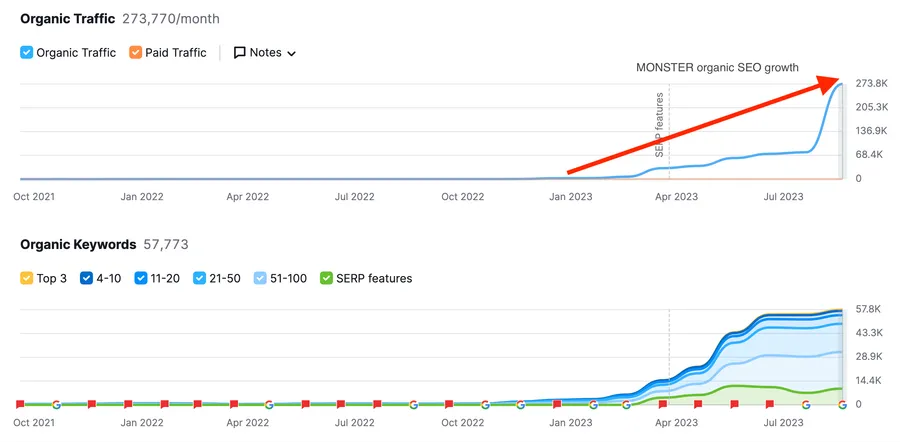
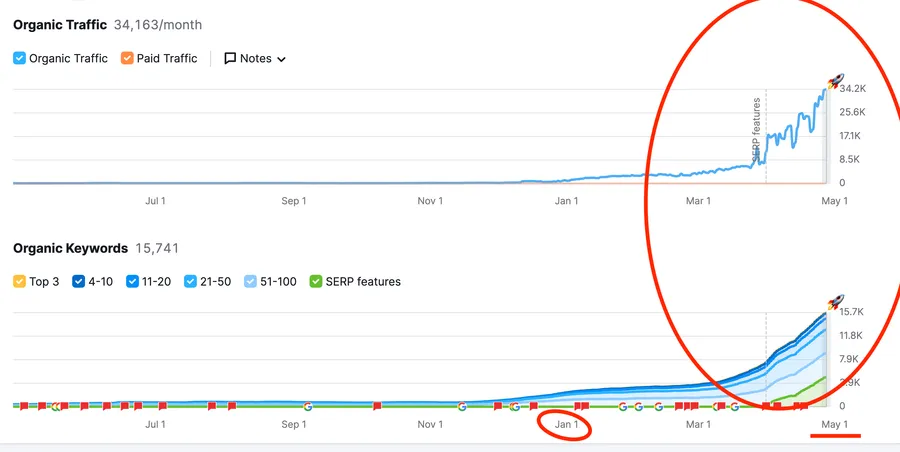
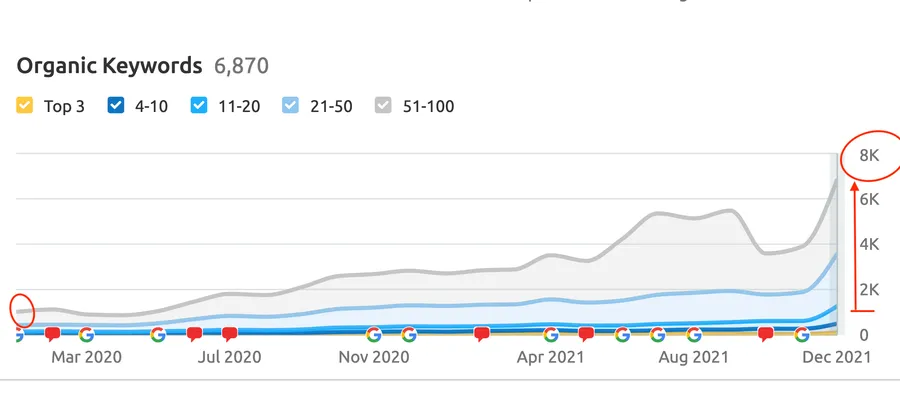
Pathology SEO performance measurement needs to account for the multi-location, dual-audience nature of the business. Top-level traffic numbers are less meaningful than location-specific visibility and booking attribution that shows which centres are growing their organic presence and which need additional attention. We track keyword rankings segmented by location and test category, organic traffic attributed to individual collection centre pages, and conversion events including online bookings, phone calls from organic landing pages, and walk-in traffic influenced by local search visibility.
For multi-site networks, monthly reporting provides both location-specific performance views and portfolio-level summaries. Operations managers can see how each centre is performing in local search relative to nearby competitors. Marketing teams can track the overall trajectory of organic visibility across the network. And executive stakeholders can assess whether SEO investment is translating into measurable growth in patient volumes and test bookings across the collection network.
Call tracking with dynamic number insertion identifies which organic landing pages generate phone enquiries and how those calls convert to booked appointments or walk-in visits. Online booking attribution tracks appointment requests from organic search, segmented by collection centre so you can see which locations are generating the most organic patient contacts. For pathology providers that offer walk-in services, local search visibility metrics track Google Business Profile impressions, direction requests, and phone calls that indicate walk-in intent driven by organic discovery.
This performance data also informs decisions about network expansion and resource allocation. Centres that are consistently outperforming their local competitors in organic search may warrant additional investment in content and review generation to extend their advantage. Centres that are underperforming relative to nearby competitors may need focused attention on their Google Business Profile, location-specific content, or review strategy. Monthly reporting presents these comparative insights clearly, giving operations teams the intelligence they need to optimise both their pathology marketing investment and their collection network performance over time. The pathology SEO programs we manage are measured against commercial outcomes, not vanity metrics, because that is the only framework that justifies sustained investment in organic search for pathology providers operating in a competitive, margin-sensitive market.