









Why Rehabilitation Centres Need Specialist SEO
Rehabilitation centre SEO operates in a fundamentally different environment to most healthcare SEO. The patient journey is shaped by crisis events, the decision-making process involves families as much as patients, and a significant proportion of admissions flow through professional referral networks rather than direct search. A general SEO agency applying standard healthcare tactics will miss these dynamics entirely, and the result will be content that ranks for terms nobody searches and conversion pathways that do not match how rehabilitation decisions actually get made.
The searches that drive rehabilitation admissions are intensely program-specific. Families do not search for 'rehabilitation centre' in isolation. They search for 'stroke rehab Sydney', 'cardiac rehabilitation program near me', 'neurological rehabilitation centre', or 'orthopaedic rehab after knee replacement'. Each of these searches carries distinct intent, reflects a different clinical situation, and requires dedicated content to capture effectively. Specialist SEO for rehabilitation centres maps each individual program to its own dedicated keyword strategy rather than treating rehabilitation as a single search category.
Our team has 10+ years of healthcare marketing experience. We understand the dual-pathway admissions model, the multi-payer funding complexity, and how to build rehabilitation marketing strategies through SEO that deliver genuine admissions growth across cardiac, neurological, orthopaedic, and specialist program types.
Program-Specific Landing Pages That Capture Search Demand
The single most important SEO asset for a rehabilitation centre is a set of dedicated landing pages for each program you offer. Cardiac rehabilitation, stroke recovery, orthopaedic rehab, neurological rehabilitation, pulmonary rehab, and WorkCover return-to-work programs all require their own pages because patients and families search for these programs by name. A generic 'our programs' page listing everything will not rank for any individual program search because it lacks the specificity and depth search engines reward.
An effective cardiac rehabilitation landing page explains what the program involves, who it is designed for, what patients can expect during the program, how long it typically runs, what the multidisciplinary team includes, and how to access the program through Medicare, private insurance, or DVA funding. It addresses the questions a patient asks after their cardiologist says 'you should do cardiac rehab' and they turn to Google to understand what that means. The same depth is needed for stroke rehabilitation pages, neurological rehab pages, and every other program you offer.
We build these program pages with dual audiences in mind. The primary audience is the patient or family member searching for information. The secondary audience is the referring professional who may visit your website before making a referral decision. Content that satisfies both audiences, providing clinical credibility alongside patient-accessible explanations, performs well in search and converts effectively across both pathways. This program-level approach is what separates facilities that capture organic search demand from those that remain dependent entirely on traditional referral relationships.
The Dual-Pathway SEO Strategy
Rehabilitation admissions come through two channels, and effective rehabilitation SEO needs to serve both. The direct pathway captures patients and families who search for rehabilitation options independently. The referral pathway supports the professional relationships with GPs, hospital discharge planners, and specialists who drive the majority of admissions at most facilities.
For the direct pathway, program-specific landing pages, local SEO, and Google Business Profile optimisation ensure your facility appears when families search for rehabilitation services. These searches often happen during acute hospital stays or immediately after a specialist recommendation, which means the content needs to provide clarity quickly. Families researching from hospital bedsides are overwhelmed and need to understand what your facility offers, whether it suits their situation, and how to take the next step within the first thirty seconds of landing on your page.
For the referral pathway, SEO plays a supporting but increasingly important role. GPs and discharge planners do research facilities online, particularly when evaluating options they have not referred to before. Content that communicates your program capabilities, team credentials, referral processes, and capacity gives referring professionals the information they need to recommend your facility with confidence. A well-structured website with detailed program information and a straightforward referral form removes friction from the referral process and makes it easier for professionals to send patients your way. This dual-pathway approach is central to effective rehabilitation centre marketing through organic search.
Local SEO for Rehabilitation Facilities
Rehabilitation searches carry strong geographic intent, though the search radius varies by program type. Outpatient cardiac rehab patients typically want a program close to home or work because they attend multiple sessions per week. Inpatient stroke rehabilitation families may search across an entire metropolitan area or even state-wide for specialist programs. Neurological rehabilitation for complex conditions like spinal cord injury may draw patients from across the country because only a handful of facilities offer the required specialisation.
Local SEO for rehabilitation centres needs to account for these different geographic patterns. Your Google Business Profile should list all rehabilitation program types as service categories so you appear in relevant local searches. Location-specific content reinforces your geographic relevance for the areas you serve. Citations across healthcare directories, rehabilitation-specific listings, and general business directories ensure search engines trust your facility's name, address, and contact information and display it accurately across all platforms. For facilities with multiple locations or satellite outpatient programs, each location needs its own local SEO strategy to capture searches in its specific service area. This is particularly relevant for rehabilitation centres that operate both an inpatient facility and separate outpatient clinics, as each location serves different patient needs and targets different geographic search queries.
Map pack visibility matters for rehabilitation centres just as it does for other healthcare providers. When a family member searches 'rehabilitation centre near me' from a hospital or at home, appearing in the top three map results dramatically increases the likelihood of receiving an enquiry. We optimise local presence as a foundation of every SEO program because geographic visibility is where organic search most directly translates into admissions enquiries.
WorkCover, DVA, and NDIS Rehabilitation SEO
WorkCover rehabilitation, DVA rehab, and NDIS rehabilitation each represent distinct patient populations with specific search behaviour and content requirements. These searches are valuable because they connect your facility with patients whose funding is already approved or in progress, reducing the friction between enquiry and admission.
WorkCover patients and their case managers search for approved rehabilitation providers offering return-to-work programs. Content that explains your WorkCover rehabilitation services, your experience with workplace injury recovery, and how your return-to-work programs are structured captures these searches and communicates your capability to insurers and case managers who influence provider selection. Return-to-work program content should address the specific stages of workplace injury rehabilitation and the multidisciplinary approach that supports successful return to employment.
DVA rehabilitation searches come from veterans and their families seeking rehabilitation services covered under DVA funding. Content explaining your DVA-approved status, the rehabilitation programs available to veterans, and how to access services through DVA captures this specific audience. NDIS rehabilitation searches come from participants and support coordinators looking for NDIS-registered providers offering rehabilitation services aligned with participant plans. Each of these funding pathways requires dedicated content that speaks to the specific patient population and their particular needs and eligibility criteria. Creating this funding-specific content also captures search queries that include funding terms, such as 'NDIS rehabilitation provider' or 'WorkCover approved rehab centre', which are valuable because they connect your facility with patients whose funding is already established or in progress. These patients typically move through the admissions process faster because the financial barrier has already been identified and addressed.
Multidisciplinary Team Content as an SEO Asset
Rehabilitation centres are defined by their multidisciplinary teams, and presenting this team depth is one of the most effective SEO strategies available. Physiotherapists, occupational therapists, speech pathologists, psychologists, exercise physiologists, rehabilitation physicians, and nursing staff all contribute to patient outcomes, and families choosing between facilities want to understand the team who will be managing their loved one's recovery.
Team content serves multiple purposes in rehabilitation SEO. Individual practitioner profiles build trust with families and provide ranking opportunities for practitioner-name searches. Discipline-specific pages explaining how physiotherapy, occupational therapy, speech pathology, and psychology contribute to rehabilitation create additional keyword-targeting opportunities. And presenting the multidisciplinary model itself, explaining how different disciplines coordinate to deliver integrated rehabilitation, differentiates your facility from competitors who may offer fewer disciplines or less coordinated care.
For Ahpra-registered practitioners within your team, individual profiles must comply with Ahpra advertising guidelines. This means avoiding outcome claims, being careful with qualifications and credentials presentations, and ensuring any specialisation claims are supported. We review all practitioner content for compliance, ensuring your team is presented compellingly and accurately within regulatory requirements.
Program-Specific Content for Referral Pathway Support
While SEO primarily captures direct patient and family searches, the content it produces also strengthens your referral pathway. GPs, hospital discharge planners, and specialists increasingly visit facility websites when evaluating rehabilitation options for their patients, particularly for facilities they have not referred to before. A GP considering where to send a patient for outpatient cardiac rehabilitation will search your facility name, visit your website, and look for specific information about your cardiac rehab program before making the referral.
The content that satisfies referrer research is clinical in tone, specific in detail, and structured for quick scanning by time-pressed professionals. Program duration, session frequency, disciplines involved, outcome measurement approaches, and referral processes all need to be clearly documented. A discharge planner evaluating inpatient stroke rehabilitation facilities wants to know your bed capacity, the intensity of your therapy program, how you coordinate with acute care teams during transition, and what the referral form process looks like. Creating this content for every program type ensures your website serves as a credible reference for the professionals who drive admissions volume.
We build referrer-focused content alongside patient-focused content within each program landing page, using clear sections and navigation that let each audience find what they need without wading through information meant for the other. This integrated approach means a single program page serves both the family member searching at midnight and the discharge planner comparing options during a ward round. Effective rehabilitation centre marketing through SEO demands this dual-audience structure because ignoring either audience leaves admissions on the table.
Measuring Rehabilitation Centre SEO Performance
Rehabilitation centre SEO success should be measured in admissions enquiries and program-specific visibility, not just aggregate keyword rankings and traffic numbers. The metrics that matter to facility management are whether organic search is delivering enquiries for specific programs, whether referrer-pathway visibility is strengthening, and whether local search presence is growing relative to competing facilities in your service region.
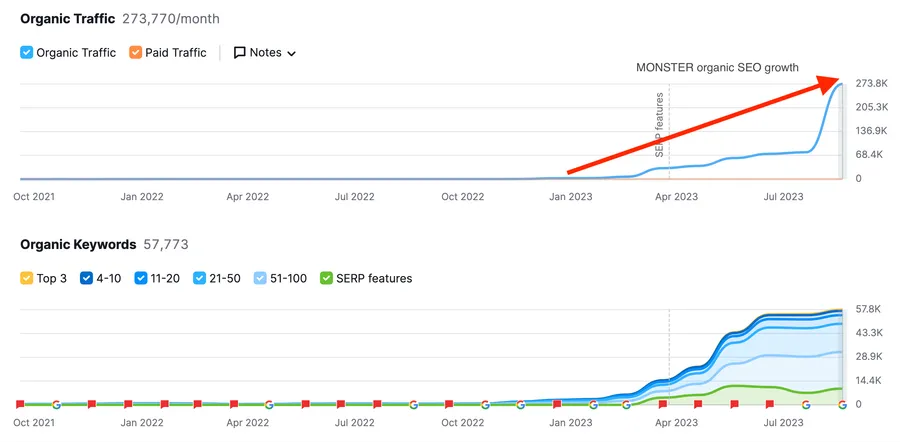
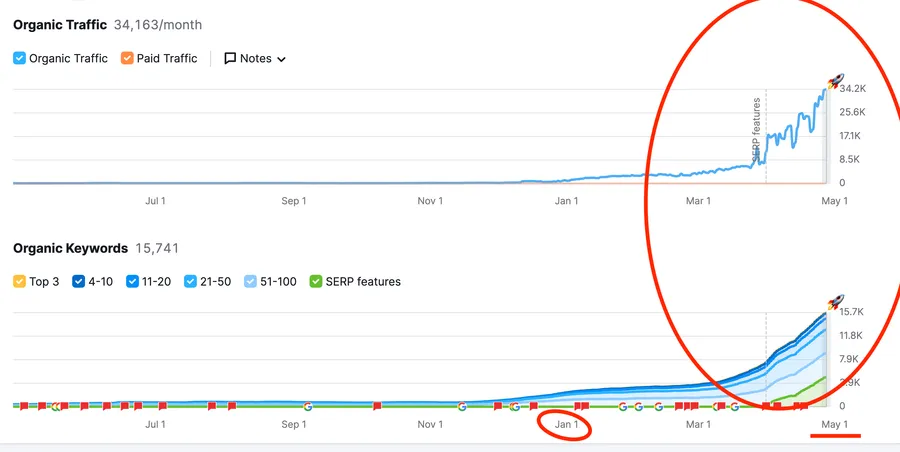
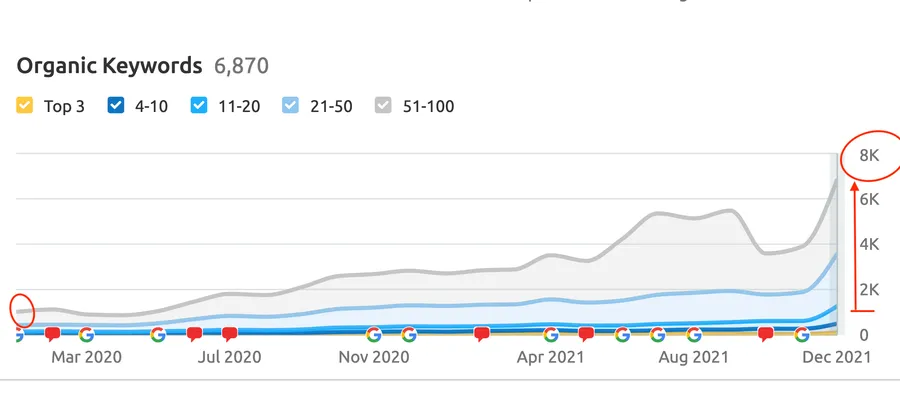
We track SEO performance across multiple dimensions. Program-specific keyword rankings show whether your visibility is growing for cardiac rehab, stroke rehabilitation, neurological rehab, and other program searches. Organic traffic trends by program landing page show whether that visibility is translating into website engagement. Enquiry attribution tracks whether organic visitors are submitting admissions enquiries, calling, or completing referral forms. And local search visibility metrics show your position in map results relative to competing rehabilitation facilities. Monthly reporting breaks performance down by program type so management teams can see which programs are growing organically and where content investment should focus next to capture more of the available search demand.
The rehabilitation centres that sustain long-term organic growth treat SEO as a continuous investment rather than a one-off project. Search algorithms evolve, competitors publish new content, and referral patterns shift as new facilities enter your market. Program-specific content needs regular updates to reflect current program offerings, team changes, and evolving clinical approaches. Local SEO requires ongoing attention to maintain map pack positions as competitors invest in their own visibility. Our ongoing optimisation ensures your facility maintains and extends its search presence through regular content refreshes, technical maintenance, and strategic adaptation to changes in your competitive landscape, the rehabilitation search environment, and the funding policy shifts that influence how patients access rehabilitation services across Australia.