











What Healthcare Content Marketing Actually Looks Like
Healthcare content marketing is the discipline of producing written, visual, and educational material that attracts patients, builds clinical authority, and earns trust before a patient ever picks up the phone. For most Australian healthcare practices, that means blog articles answering the questions patients actually type into Google, condition and treatment guides that demonstrate expertise, practitioner profiles that signal credibility, and patient education resources that do genuine good while also driving organic traffic. We have been building healthcare content programs for practices across every specialty for over a decade. Medical content marketing done properly sits at the intersection of clinical accuracy, Ahpra compliance, patient psychology, and Google's YMYL quality standards. Get any one of those wrong and the content either fails to rank, fails to convert, or creates a regulatory problem.
The practices we work with typically fall into one of two camps when they come to us. Either they have almost no content beyond a handful of thin service pages and a blog that was last updated eighteen months ago, or they have content that was written without strategy, ranks for nothing, and reads like it was produced by someone with no healthcare knowledge. Both situations are fixable. But fixing them requires someone who understands how healthcare patients search, what Google expects from medical content, and where the Ahpra lines sit.
Examples of our published healthcare resources
These are resources published on our own website, showing how we organise detailed information for healthcare business owners. They are not patient-facing client work.
- Physiotherapy marketing guide: a detailed guide organised around the decisions a practice owner needs to make.
- Healthcare Google Ads cost benchmarks: a data resource with source notes, definitions and limitations.
- Healthcare website design agency comparison: a comparison with linked agency sources and publisher disclosure.
Why Healthcare Content Is Held to a Higher Standard
Google classifies health content as YMYL, meaning Your Money or Your Life. Content that could affect a reader's health, safety, or financial wellbeing gets scrutinised more heavily than content about restaurants or home renovation. For healthcare practices, this means your blog posts, condition pages, and treatment guides need to demonstrate genuine experience, expertise, authoritativeness, and trustworthiness. Google calls this E-E-A-T, and it is not a suggestion. It is the framework their quality raters use to evaluate whether health content deserves to rank.
What does E-E-A-T look like in practice? Author attribution to qualified practitioners. Content that reflects first-hand clinical experience rather than rewritten Wikipedia entries. A website that clearly identifies who runs the practice, what qualifications they hold, and how long they have been practising. These signals matter enormously for health content and they are the reason that a blog post written by a freelancer with no healthcare background will almost never outrank a shorter, better-attributed piece from a practitioner's website. Our content programs are built around E-E-A-T from the ground up, because without it, nothing else works.
The Helpful Content Factor
Google's helpful content system, which rolled out in 2022 and was folded into its core ranking systems in 2024, specifically targets content that was created primarily for search engines rather than for people. Health content is one of the categories most affected. If your blog exists purely to rank for keywords and provides no genuine value to a patient reading it, Google will suppress not just that page but potentially your entire site's organic performance. We write healthcare content that genuinely helps patients understand their conditions, their treatment options, and what to expect. That is not just good ethics. It is the only content strategy that works under Google's current systems.
Ahpra Compliance in Healthcare Content
Every piece of healthcare content we produce is reviewed against the Ahpra Guidelines for Advertising a Regulated Health Service before publication. This is not optional, and it is not something we treat as an afterthought. Ahpra compliance shapes the content from the brief stage, not just at the review stage.
The areas that trip up most practices and most generalist agencies are well documented. Testimonials are restricted in advertising for regulated health services. Before-and-after imagery needs to meet specific requirements around matched conditions, no enhancement, and appropriate context. Claims about treatment outcomes need to be accurate and not create unreasonable expectations. Language like "the best", "guaranteed results", or "painless" is high-risk. Even blog content that a practice considers educational rather than promotional can fall within Ahpra's definition of advertising if it is designed to attract patients to the practice.
Our team knows where the lines sit because we have been writing Ahpra compliant content for years. We know how to write a compelling condition guide without overclaiming outcomes. We know how to present practitioner expertise without breaching comparative advertising rules. And we know how to produce content that genuinely converts patients without relying on the testimonial and outcome-promise tactics that put practices at regulatory risk. If you have ever received an Ahpra compliance notification, you understand why this matters. If you have not, our job is to keep it that way.
Medical Blog Writing That Ranks and Converts
Medical blog writing is where most healthcare content programs begin, and where most of them fail. The failure usually looks the same: a practice publishes a handful of generic articles ("5 Tips for Better Sleep", "Why Exercise Matters"), nobody reads them, they rank for nothing, and the practice concludes that content marketing does not work for healthcare. The problem was never content marketing. The problem was writing content that had no keyword strategy, no clinical depth, and no connection to the services the practice actually offers.
Our medical blog writing process starts with keyword research specific to the practice's specialty and catchment. We identify the questions patients are actually typing into Google, the search volumes behind those queries, and the competitive difficulty of ranking for them. Then we build a content calendar that prioritises topics based on three factors: search volume, relevance to the practice's services, and conversion potential. A blog post about a condition the practice treats that ranks on page one and includes a clear pathway to book an appointment is worth more than a hundred generic wellness articles.
Content That Sounds Like Your Practice
Healthcare copywriting needs to sound like it came from the practice, not from a content mill. We spend time understanding each practice's clinical philosophy, the way their practitioners talk to patients, and the specific language their patient demographic responds to. A sports physio practice in Bondi needs different content than a geriatric GP clinic in Ballarat. The conditions are different, the patients are different, the tone is different, and the search queries are completely different. We write for your patients in your market, not for a generic healthcare audience that does not exist.
Patient Education Content vs SEO Content
There is a persistent tension in healthcare content between what patients need to know and what search engines need to see. Some practices prioritise patient education and produce beautifully written resources that nobody finds because they were never optimised for search. Others chase keywords with thin articles that rank briefly and convert poorly because they do not actually help anyone.
The best healthcare content programs do both at once. A condition guide about lower back pain can genuinely educate patients about causes, when to seek treatment, and what to expect from physiotherapy, while also targeting "lower back pain physio [suburb]" and building topical authority that lifts the entire site. A treatment explanation page for dental implants can walk patients through the procedure, recovery, and costs in a way that builds confidence, while also ranking for commercial searches that drive high-value consultations. We do not see patient education and SEO as competing priorities. Done properly, they are the same thing.
Building Topical Authority for Healthcare Practices
Topical authority is the principle that Google rewards websites that demonstrate deep, connected expertise on a subject. For a physiotherapy practice, that means having content that covers not just "physio near me" but also the conditions you treat, the techniques you use, and the questions patients ask at every stage of their care journey. Each piece reinforces the others, and the cumulative effect is a site that Google recognises as an authority in its field.
We build healthcare content programs around topic clusters. A core service page sits at the centre. Supporting blog posts, condition guides, and treatment explanations link to and from that core page. Over six to twelve months, the cluster builds enough depth and internal linking weight that the core page starts competing for the high-volume terms that drive real patient enquiries. This is how a three-practitioner allied health clinic outranks a hospital website for specific treatment searches. Not by spending more, but by being more focused and more thorough.
Healthcare Content Calendars and Planning
Consistency matters more than volume in healthcare content marketing. Our content calendars are built around sustainable output that the practice can maintain and that we can produce to the quality standard healthcare content requires.
We also factor in health awareness periods that are relevant to each practice's specialty. Mental Health Month in October, Heart Health Week, Dental Health Week, National Pain Week, World Physiotherapy Day, and dozens of others provide natural content hooks that align with what patients and media are already discussing. These awareness periods create search volume spikes that well-timed content can capture.
Content Review and Clinical Accuracy
Healthcare content cannot be published without review. Every article, guide, and page we produce goes through a compliance review for Ahpra alignment and a clinical accuracy check. For some specialties, that means a practitioner at the practice reviews the content before publication. For others, our internal review covers general content, with clinical statements confirmed by your team. Either way, nothing goes live without sign-off. This adds time to the process, and we plan for it. Practices that have tried to shortcut clinical review have learnt the hard way that one inaccurate article can undo months of trust-building.
Video and Visual Content for Healthcare
Written content is the foundation, but healthcare practices increasingly need video and visual content to compete. Practitioner introduction videos, treatment explanation clips, and condition education content all perform well on practice websites, social media, and YouTube. Visual content also supports E-E-A-T by putting a real face and a real clinic behind the expertise.
Ahpra's advertising guidelines apply to video and visual content with the same force as written content. Before-and-after imagery, patient testimonials on camera, and outcome claims in video format all carry the same regulatory risk. We advise on healthcare video content that stays within these boundaries while remaining engaging.
Measuring Healthcare Content Performance
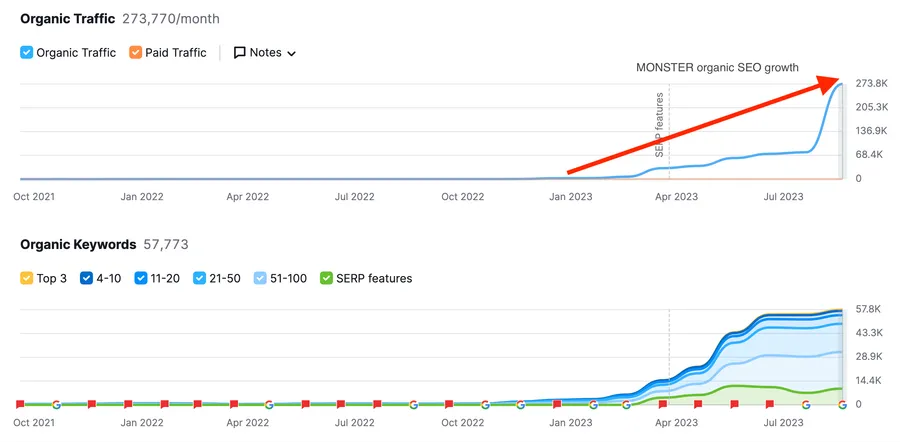
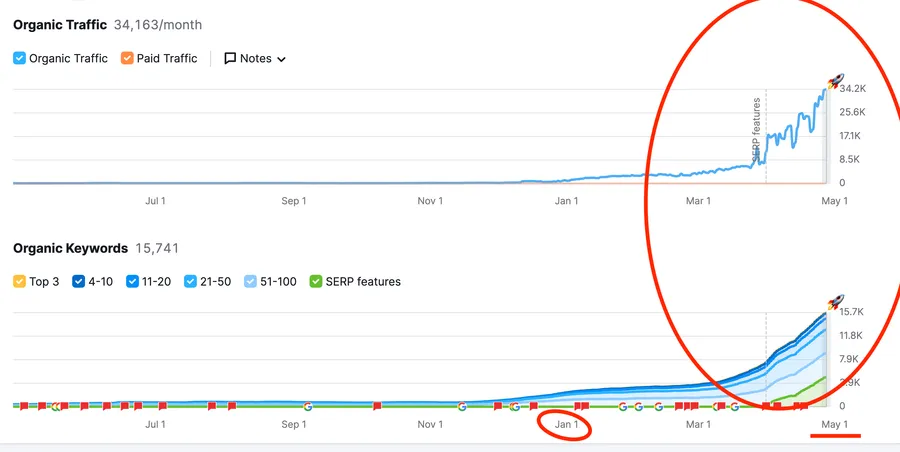
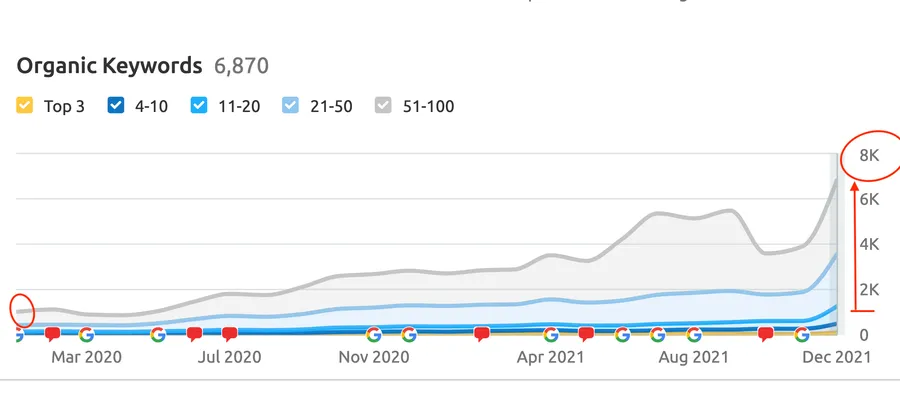
We track healthcare content performance across three layers. First, search visibility: are the articles and guides ranking for the terms we targeted, and is the site's overall keyword footprint growing? Second, traffic and engagement: are patients finding the content, reading it, and spending meaningful time on the page? Third, and most importantly, conversions: is the content driving phone calls, form submissions, and online bookings? A blog post that ranks first for a high-volume keyword but generates no enquiries is not performing. A condition guide that ranks fifth but drives three consultation bookings per week is.
This measurement discipline shapes our ongoing strategy. We double down on topics that drive results and update content that ranks but does not convert. Healthcare content marketing is not a set-and-forget exercise. It is an ongoing program that improves as the data accumulates.
Why Generalist Agencies Struggle With Healthcare Content
We rebuild healthcare content programs from generalist agencies regularly. The problems are consistent. Writers with no healthcare background producing content that is either clinically inaccurate or so generic it could apply to any practice in any country. Zero awareness of Ahpra requirements, leading to content that exposes practices to regulatory risk. No understanding of YMYL standards or E-E-A-T, resulting in content that Google's quality systems actively suppress. And keyword strategies built around vanity terms rather than the searches that actually drive patient bookings.
Healthcare content marketing requires writers who understand medical terminology without being intimidated by it, editors who know Ahpra's boundaries, strategists who understand healthcare patient behaviour, and SEO expertise specific to YMYL categories. That combination is rare in generalist agencies. It is what our team has spent the last decade building.